
Author: Linda Slapakova, Dr. Rachael Gribble and Dr. Heidi Cramm
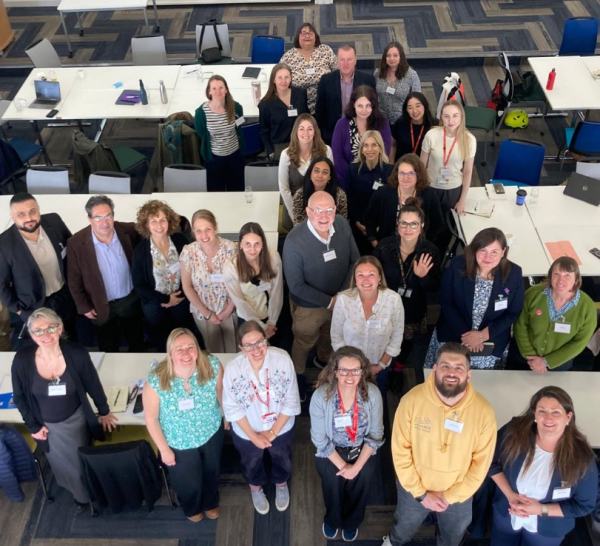
On 12 May 2026, the King’s Centre for Military Health Research (KCMHR), in collaboration with the Canadian Institute for Military and Veterans Health Research (CIMVHR), held the 11th Military Families Invitational Roundtable. This symposium is dedicated to advancing knowledge on the experiences of military families and their inclusion in research, policy making, services, and support structures.
While focus on military families in research, policy and support provision across UK and Canada has grown substantially in the last 15 years, families are too often forgotten, excluded or marginalised in policy and support provision in the Armed Forces community.
The Families Symposium brought together researchers, support providers and policy makers to discuss how structural inclusion of families can be fostered. The discussion also considered who needs to be strategically included when talking about military family related policy, programming and research.
The roundtable discussions highlighted three key priorities for advancing inclusion of military families: first, effective use of language and continued awareness-raising within both the occupational and broader community; second, improving research techniques to maximise inclusivity and impact; and third, thinking ‘outside of the box’ to engage overlooked groups. Together, these priorities should build the structures and strategies for military families to be considered a part of ‘business as usual’ among researchers, policy makers and support providers.
Fostering families’ inclusion through language and awareness-raising
The symposium discussions highlighted that continued awareness-raising is needed both with families and with policy makers and support providers to ensure information is easily available and accessible. Among families, some may not understand what support and resources are available if they need them or how to access them. They also may not know how to engage in research to make their voices heard. Among policy makers and support providers, awareness of military families and their consideration in policy and services should be more consistent and strategic. Including families as advisors in research projects is an important and welcome step in that direction, which has become increasingly common. Integrating families into governance of larger research programs and policy initiatives further consolidates their inclusion; moving families structurally into larger-scale advisor roles to ensure resonance with current priorities has been achieved in a few notable examples from Canada – the Atlas Institute for Veterans & Families, Garnet Families Partnership).
The symposium discussions pointed to sensitive use of language as an essential aspect of continued awareness-raising. The discussions recognised that there are complexities in how we talk about military families, because using the term ‘military family’ may make families more invisible. Rather than distinguishing ‘the family’ from ‘the Service person’, research and policy may need to adopt a more family-centred lens to acknowledge that Service personnel fundamentally exist within – rather than distinct from – a family unit. Family members should also be recognised as members of the Armed Forces community in their own right. Some examples were given of services and organisations already centring families rather than individuals, allowing them to grow community and support through and across family units.
Ongoing attention is also needed on who is considered a family and how families are defined in research, policy and practice. While there is emerging recognition that the characteristics of modern families are changing, language often still implicitly centres ‘traditional families’ (e.g., heterosexual, married couples with children) and can thus marginalise those from less traditional family structures.
Researchers, policy makers, and service providers also need to continue working towards more accessible communication with military families to effectively engage, raise awareness, and share information. This should ensure that information shared with families – including research findings – is digestible and easy to understand. While there is a growing focus on knowledge translation among researchers, there is still a large disconnect between knowledge that has been generated through research and resources that families can practically access and use for their benefit.
Improving research techniques to maximise inclusivity and impact
Throughout the day, discussions circled back to the fact that meaningful participation of military families in research is essential, and research techniques need to evolve to address barriers to participation. These barriers can be both motivational and practical.
From a motivational perspective, researchers need to ensure that studies are targeted at priority gaps that represent important issues in military families’ lives. Better recognition is needed of the fact that participation in research is a burden on families’ time, and that participation should therefore be meaningful – not just a tick-box exercise – and useful for participants. Good research practice should include an ongoing dialogue with participants, keeping them informed about research findings that they contributed to and how those findings are being translated into policy and practice. Engagement between researchers is also essential to ensure studies are not being duplicated and that there is a shared understanding of important research gaps.
It was recognised that, among some communities, distrust with research settings still exists, sometimes based on experiences of institutional betrayal. Building trust and rapport with those communities is important to ensure different voices are represented in research and knowledge generation. Incorporating lived experience in the design of studies from the start may help in this process. Co-design and co-production have rapidly become standard considerations in applied research.
To address practical barriers to participation, researchers should plan studies effectively to allow sufficient time and resources for effective and meaningful engagement with families. Alongside providing compensation for participating in studies, research should consider different engagement formats for participant groups. As highlighted by several symposium presentations, this can include creative arts-based methods for both children and young people and adult participants.
Discussions also highlighted several ways through which gaps between policy and research can be better bridged to ensure research addresses priority issues and is, in turn, impactful. Different avenues could be explored to embed policy makers and service providers more closely in research studies. This could include, for example, policy makers being part of Advisory Boards or even co-leading studies with researchers.
In turn, funders need to ensure sufficient funding is being provided to allow for research mobilisation and translation activities throughout, and at the end of, research studies. Policy makers also need to engage with research constructively, including when research presents evidence that may be critical of existing policies.
Engaging with over-looked groups and all relevant parties
While research, policy, and support provision has gradually expanded to include a wide range of groups among military families, several groups were highlighted who may still be over-looked or marginalised:
- Firstly, as already noted, non-traditional families can be at a potential disadvantage to those from more traditional family structures. Examples of family structures who may need better consideration include same-sex couples, male partners of female personnel, and single parents, among others.
- Secondly, young children (i.e., pre-school years) remain very under-represented in research, potentially due to limited awareness of age-appropriate methods for engaging this group. More broadly, recognition is needed of the broad age range of Service children to include babies, children and young people.
- Thirdly, more attention is needed on members of military families with caring responsibilities. This includes particularly ‘sandwiched’ carers who have caring responsibilities towards dependent children but also towards elderly parents. The number of people in this category is expected to increase with demographic change and population ageing in societies such as the UK and Canada.
From a policy and service provider perspective, fostering strategic inclusion of families may also require engagement with a wider range of policy and service providers, other than those who oversee military families-related policy and services at the national level. In particular, this includes non-military groups responsible for services that are essential for military families (e.g., healthcare providers, educators). Discussions highlighted that military families research can feel secluded and detached from related research with non-military families; more engagement between researchers working with military and non-military families should be pursued to share learning and lessons from those fields. Research should also engage with those working across different regions, localities, and the UK’s devolved nations, as well as look across similar military and social structures internationally, particularly the ANZAC nations (Australia and New Zealand).
Remembering Professor Nicola T. Fear, CBE
This year was a difficult year for attendees as we gathered without Nicola following her death after a short illness. Nicola created the KCMHR-CIMVHR Roundtable in 2017 with Dr. Heidi Cramm and was pivotal as a families’ researcher, not only in the UK, but across the Five Eyes countries. In 2025, she was named as the first international CIMVHR Fellow as a result of her work on military and veteran families.
The event began with a session dedicated to the memory of Nicola and concluded with a short video recorded at the 2025 CIMVHR Forum where she shared her advice for those starting out in military research. Presentations from Dr Rachael Gribble, Dr Liam Satchell, and Dr Mary Keeling described her importance in terms of encouraging and driving research and capacity around families and her kindness, warmth and generosity, especially for early career researchers. In total, Nicola had formally managed or supervised more than 90 families’ researchers, many who were in the room, across 18 separate studies in the UK covering mental health and wellbeing, relationship outcomes, intimate partner violence, reservist families and interventions for families. Her reach extended across the globe, to myriad studies with her Canadian colleagues in the Families Matter Research Group & Garnet Families, and collaborations with Australian centres like Gallipoli Medical Research. She was seminal in establishing the SCiP Alliance Impact Centre and had led the Centre for Evidence in the Armed Forces Community since 2022. Her loss is keenly felt professionally by also personally by all who knew her. We seek to continue her legacy in this space and to continue understanding, representing, and reflecting the experiences of military and veteran families. One way this is being done is through the establishment of the Townsend Fear Fellowship in Occupational Epidemiology to support an early career researcher with protected time to think, learn and produce meaningful work in occupational health.
Conclusion
The 2026 KCMHR–CIMVHR Military Families Day Roundtable demonstrated that continued efforts are needed to strengthen the strategic inclusion of military families, and that this requires sustained attention, collaboration and innovation from different groups. By adopting inclusive language, research techniques, engagement and collaboration practices, the community can move closer to ensuring that families are no longer peripheral but centrally recognised in policy, programming, and practice. The importance of relationships and creating networks was highlighted by discussion of Nicola and we encourage all to take her advice to be curious, to be kind, and to be generous with their time.