In British Forces Brunei, SSAFA, the Armed Forces charity, supports families through its Community Health Team by helping ensure health information is understood, culturally appropriate and meaningful. For some families living overseas, access to health advice is not just about language, but about how information is explained, framed and discussed.
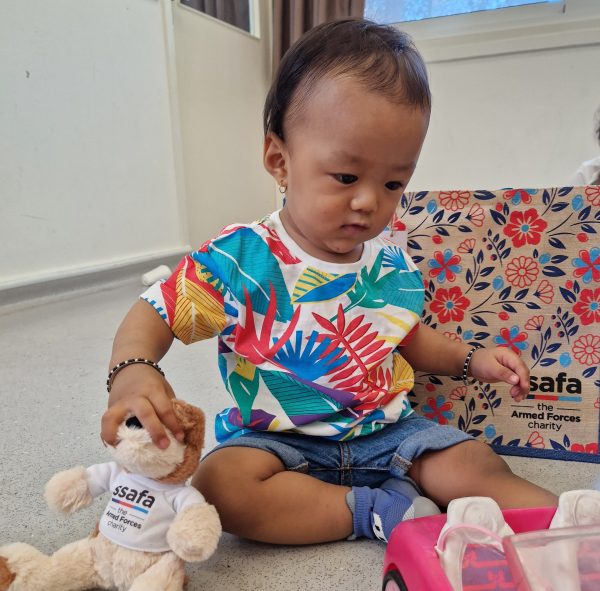
Health information is most effective when families can relate it to their own experiences and cultural understanding. In British Forces Brunei, much of SSAFA’s Community Health Team work supports Gurkha families, where Nepali cultural and linguistic context shapes how some health concepts are understood and discussed.
For example, there is no direct word for “depression” in Nepali. This can influence how emotional wellbeing is understood and discussed, particularly during pregnancy and the early months after birth. Rather than relying on literal translation, conversations often focus on mood, emotional wellbeing, relationships and bonding, helping families engage with the information in ways that feel familiar and respectful.
Caroline Todd-Earlam, SSAFA Health Visitor said,
“We adapt how we explain health information, so it makes sense within a family’s cultural context. Families often have strong traditions around care, protection and wellbeing, particularly with new babies. By listening first and respecting those beliefs, we can have open conversations about safety and support that families feel comfortable engaging with.”
Cultural understanding is also important when discussing everyday care and safety. In Nepali families, traditional beliefs around protection and healing may include keeping meaningful items, such as ornamental jewellery, close to a newborn. These practices are rooted in care, spirituality and protection, and are an important part of family identity.
The Community Health Team, including midwives, health visitors and health visitor assistants, play a key role in these conversations. Health visitor assistants in particular act as a vital cultural link, supporting clear, respectful communication and helping bridge understanding between families and healthcare professionals.
Deepti Shrestha and Prabina Gurung, SSAFA Health Visitor Assistant’s said
“The health visiting service is not a common practice in Nepal, a lot of Nepalese families in BFB are unaware of the services we provide. So, as translators we work hard to build trust with the families by demonstrating respect to the traditional practices at the same time ensuring clarity about the Healthy Child program and standard NHS practices. We also have to frequently explain the cultural and religious nuances to the health professionals who may see things differently.”
Within antenatal and postnatal appointments, mental and emotional wellbeing is discussed as part of wider health conversations. These discussions are framed carefully to reflect cultural context, helping families feel listened to and supported rather than overwhelmed by unfamiliar advice.
This approach also supports continuity of care. By adapting how information is shared, members of the Community Health Team can build trust over time and encourage open conversations, particularly around topics that may otherwise feel difficult to raise.
For families living overseas, feeling understood can be just as important as receiving information itself. Taking time to explain health advice in a culturally sensitive way helps families feel heard and respected during important stages of family life.
Through its Community Health Team in British Forces Brunei, SSAFA helps ensure that health information is not only accessible, but meaningful, supporting Armed Forces families overseas to better understand their health and wellbeing without having to navigate those conversations alone.